RSS

Category Archives: Thoughts on Writing

Does Too Much Detail Spoil the Pace?

I’ve been working on a scene involving a spiritual ceremony. It is based on a real ritual. The initial part scene is full of sensory details and the mechanics of the ceremony. Yesterday, I sat down to write and as usual, I read the last few paragraphs to refresh my recollection and get into the mood of the scene. During the read back, I realized that, though vivid, the scene had so much detail that is slowed the pace to a crawl. Just as important, was the fact that so much detail was, not necessarily, important to help create the feelings I wanted the reader to experience.

This particular scene has two primary purposes. First, to foreshadow upcoming events and second, to enhance the conflict. As I wrote the scene initially, I went into all of the details of the ceremony trying to make it as real for the reader as if they were actually there. My thinking was that it would be easier for the reader to understand the source of ‘visions’ (i.e action) the protagonist was having in the later part of the scene. When I read the scene, the experience of the ceremony was there. However, it took a long time to get to the purpose of the scene. I’m not ready to trash the experiential detail as yet. I want to finish the scene and see if the action of the second half offsets the slow pace of the beginning. If it does, I’ll leave it in. If not, it will get sliced during revision.

I much prefer a quicker paced read.  Give me enough detail to paint a picture and move on. My imagination is vivid enough to fill in the blanks, Some of the ‘Masters’ e.g. Tolkien, Jordan, Brooks, drive me nuts with the amount of detailed description. Is a four page dissertation about a pastoral setting really necessary to bring the reader into the setting? I’m sorry, but the answer is, no. Most people who read the fantasy genre already have overactive imaginations. They only need a swift kick in the pants to get an image in their heads and to the reader, their version is more vivid than the writer can explain it anyway.

However…There are times when detail is necessary. Usually this happens when the thing being described is critical to the story. For example, the description of the one Ring in LOTR. It is THE critical piece of the story so taking the time to describe it, makes perfect sense. The thing to keep in mind when adding detail to your scene is, ‘How important is the description to the Plot?’. If it is not that important, a few words or lines should be sufficient to set the scene and bring in the reader’s senses. If it is ‘the One Ring’ of your story, go ahead and take some time. It will add emphasis the reader will grasp.

As always, try to mix your setting details and descriptions into the action and/or dialogue so as to avoid the infamous info dump.

So, tell me, Do you prefer a lot of detailed description or can you get by with just enough to pique your imagination?
 
12 Comments

Posted by on October 7, 2013 in Thoughts on Writing


Tags: , , , , , , , ,

Cultural Integration in Fantasy and Sci-fi

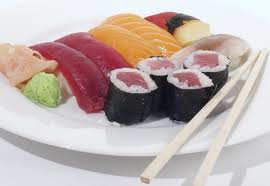
What do sushi, craft beer, Christmas, body piercing, and Bollywood dancing all have in common. They are cultural integrations. Any time two cultures come together, whether for trade, war, or accident, there will be some form of conflict.This is good for the story line. However, there will also be some form of integration, whether it’s food, entertainment, religion, clothing, naming, or art. This can enhance the depth of the setting. Let’s use sushi as an example.

Japanese culture comes to the United States

Japanese culture comes to the United States

Sushi has been around, in Japan, since the early 1800’s. In 1966, a gentleman by the name of Noritoshi Kanai along with a Jewish business partner, Harry Wolff, opened Kawafuku Restaurant in Los Angeles. Initially successful with Japanese businessmen, they then introduced it to their American colleagues to the ‘new’ cuisine. Soon after, sushi bars began to pop up in both New York and Chicago. Now, you can find sushi bars throughout the U.S.

Christmas vs. Yuletide

Christmas vs. Yuletide

Easter vs Various Fertility Festivals

Easter vs Various Fertility Festivals

Another example is the way the ancient Romans aligned religious holy days with pagan festivals in an effort to pacify and convert the conquered Peoples to Roman beliefs.

Keep in mind that the most frequently integrated pieces of a culture were ideas/beliefs, things that could be easily carried, or things created from raw materials common to both cultures. So, the genres of Fantasy and Sci-fi are the perfect vehicles to play and experiment with this type of cultural integration. First of all, the author already has strange cultures to develop. Why not add a few cultural integrations and connect these strange cultures in a real way.

Food and drink are the easiest by far. Just add a race or place-name and your there. E.g. Fae wine, Romulan rum, French fries, hot springs water. Clothing is a bit more subtle in that the fabric can be placed from somewhere else or perhaps the cut of the clothing. E.g. Italian cut suit, Chinese silk, or Western wear blue jeans. Some things will take some explanation as to the origin and for the integration, like sushi or chocolate. This can be tricky as the author needs to balance need for information against the dreaded info dump.

The bottom line is this. Cultural integration happens wherever two or more cultures bump into each other. The exchange of ideas and information enriches the affected cultures, though not always equally. Fantasy and Sci-fi authors who fail to incorporate these cultural integrations, short-change their world, the story, and ultimately the reader.

So, as I sit back in my Adirondack chair, wearing polar fleece, western denim jeans and Navajo boot moccasins, drinking Russian vodka and Sprite soda, nibbling on Klingon krinkles and Wisconsin cheddar cheese, I will contemplate how best to incorporate a group of intoxicated faeries into a Plains Indian Eagle Dance.

 
4 Comments

Posted by on September 30, 2013 in Other Strangeness, Thoughts on Writing


Tags: , , , , , , , , , , , ,

Fantasy tidbits

Today I am guest posting for follow blogger byjhmae. I was surprised when she asked me. But I jumped at the chance. She always has an interesting take on writing and current issues. If you have not already dropped by her blog, do so. You will not be disappointed. And today, you would get the added pleasure of hearing more from me. 😉

As the title suggests I talk about how fantasy and bringing different spiritual cultures together can create conflict. There are also a few other tidbits on fantasy writing and magic systems. Enjoy.

Fantasy – the purest form of fiction

 
6 Comments

Posted by on September 12, 2013 in Journey into Fantasy


Tags: , , , , , , , , ,

Writing Craft Help

I have a pretty extensive collection of books on the craft of writing. Not exhaustive by any stretch, but I have quite a few. At the recommendation of writer friends, I recently picked up two that I think are noteworthy.

The first one is a short (80 pages), but very useful book on editing, “Dunne with Editing, A Last Look at Your Manuscript” by Nann Dunne. Its focus is primarily on copy editing. The content is broken up into eighteen clear concise chapters that detail one part of the editing process. in addition, the author gives understandable examples showing before and after editing samples.

The book acts like an editing checklist. Chapters include the usual topics like spelling, passive voice and overused words. It also includes topics on participial clauses, dialogue punctuation, attribution tags, and the Burly Detective Syndrome. Am actual checklist is included in the appendices. As is a sampling of overused words and prepositions. the final appendices include short discussions on novel planning and structure as well as story arcs.

If you are looking for a ‘quick and dirty’ copy editing book to remind you of the little things and some big things to look at once you get past that first draft and before you pay for a professional to formally edit your MS, Then I would recommend adding this little gem to your craft library.

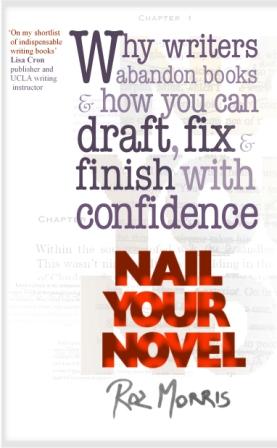
The second book is  “Nail Your Novel – Why writers abandon books and how you can draft, fix, and finish with confidence” by Roz Morris.

Image used with Permission

Image used with Permission

If you are a writer who has ever stumbled, fallen down, and/or quit working on a project, You MUST read this book. If you are just starting out and are looking for one book to HELP you get from idea to finished work. You SHOULD read this book before you put 60,000 words on the computer and find you don’t know where to go next.

Plans scare some writers. So, I will use the term method to describe what this book is about. The author lays out a method that takes the writer through a process of writing, rewriting, and polishing a story from start to finish. She begins by providing an index to resources for each topic that she will cover. That way if you are having trouble with scene structure, you can easily find it in the beginning of the book and go right to the section on Card Shuffling. In addition, she includes games, tricks, techniques and rescue remedies to help the writer walk through the method and finish their manuscript.

The author does a great job of summarizing each chapter and reminding the writer what they should be trying to get right during each stage of the novel-writing process and what the inner critic should or should not be doing. Her thumbnail tips throughout the chapters reinforce the method in simple language. The tools she recommends, including storyboard card shuffling and beat sheets, are tried and true and most important, they work.

Another positive is that this is not a three-inch thick tome that will take you a month to work through. At 175 pages, it is concise and just the sort of book you can keep close to your computer to quickly find what you need. If the book is not enough for you. Or, if you are like me and you have follow-up questions, the author’s blog site, ‘Nail Your Novel’ is full of additional advice and tips.

Both of these books now sit on the shelf closest to my writing desk, Both have numerous post-it flags attached at critical chapters. I’m not saying that these are the only books on writing craft you should own. What I am saying is my recommendation would be to add them to your collection. I know they will get lots of use.

 
4 Comments

Posted by on August 7, 2013 in Thoughts on Writing


Tags: , , , , , , ,

Writing Euphoria

Yesterday, I turned off my laptop and sat back in my chair. It took ten minutes before I realized I was grinning from ear to ear. I had only written a few hundred words. But, they were critical to the protagonist’s character arc. Before, the character’s motive seemed thin. They did not draw the reader in. There was no anchor point as to why the character would be acting the way I expected him to act.

Now, there was conflict, both internal and external. The foundation for the subplot was laid and I could easily build on it throughout the rest of the story. Most of the story, to this point, has been written as a series of flash fiction based on an image I had for a particular scene. It has worked great to get scenes written. However, they are not tied together very well and it’s missing depth of plot. I decided that to help with the story moving forward, I needed to go back and plug-in some detail.

Anyway, back to my grin. I was really happy with the way the scene came out as you can plainly see. I realized that this feeling of euphoria was something that I felt every time I finished a writing session. Even those times when writing was a struggle, I would finish the paragraph or sentence and sit back. I couldn’t help but smile.

Maybe it’s the joy of creativity. Maybe the feeling of crashing through a ‘block’. Maybe it’s the joy of using words to make pictures. Or, maybe it’s seeing the story unfolding before my eyes and feeling what the character’s feel. Whatever it is. I love it. It’s a drug that is drawing me into an addiction. When I’m not writing, I am thinking about writing and the story to come. I haven’t reached a point where I put the rest of my life on hold. But, I could see it happening. For now, I will write as often as I can and enjoy the glow that comes after each writing session.

How about you. Do you get a feeling of euphoria after a writing session? Does this feeling disappear after you have published a bunch of books? Lord, I hope not.

 
5 Comments

Posted by on July 29, 2013 in Thoughts on Writing


Tags: , , , , , ,

Women Protagonists in Fantasy Fiction

I recently listened to a panel of successful female writers and editors, from the fantasy genre, discuss female protagonists. As a male writer, I found it an interesting discussion. Hoping for some insight on how to make my female characters deeper and more real, what actually was discussed was a distinct dissatisfaction across the panel that most female protagonists in the fantasy genre were kickass warriors.

Hmm. Isn’t that feminist’s equality? I asked myself.

Hold on a moment. Before you all start to go off on me as being a sexist, let me continue. Everyone, myself included, was in agreement that a kickass warrior was infinitely better than the pretty pitiful princess that needs rescuing. The question became, “What other journeys are there for a female protagonist in a fantasy story beside Joseph Campbell’s ‘Hero’s Journey’?” Campbell’s journey is by far the most popular and most recognized.

Most fantasy stories have a hero of some sort as the protagonist. It just the way things are in the genre. Maybe because the standard good vs evil convention leads itself in that direction. There has to be someone to vanquish evil or evil will destroy everything.

It made me wonder about other potential character arcs. What other female specific arcs are there? As a matter of fact, I cannot remember hearing of any other character arc being ‘named’, let alone documented. What can I say, I’ve led a sheltered life. Shouldn’t any arc that you can find in literature be used in fantasy?

What other “journeys” are you aware of? Have they been documented in detail somewhere? What have you used? Have kickass female warriors become merely a cliché? Boy, I hope not! It’s hard to beat a story about a woman who goes around kicking ass and taking names.

Your Thoughts?

 
18 Comments

Posted by on July 23, 2013 in Thoughts on Writing


Tags: , , , , , , , ,

Who’s driving this crazy thing?

What is this whole process of storytelling? Sometimes we get so caught up in character arcs, plot points storyboarding, outlines vs pantsing, and God knows what else, that we forget what makes up a story and how to tell one. Sure all of the volumes on writing craft will take you down into the weeds of writing and break down every detail of the mechanics involved. However, sometimes it’s all those details that get in the way of telling a good story. I know a few writers who are so worried about the details that they become “Blocked”. We will discuss writers block in another post so I’m not going down that dark hole today.

Let me start by telling you a story:

A group of writers were sitting on a patio, drinking their tea and eating cucumber sandwiches. Being the novice among the group, I asked the question, “What do you need to tell a good story?” They all took another bite of their sandwiches and then sipped their tea. Thoughtfully, One of the more successful of the group announced that, “All you need, to tell a story, is POV and ask the question, ‘What happens next?'” His comment was followed by much head nodding and quiet mumblings of, “Yea, verily, yea.” by the rest of the successful writers present. I took this pearl of wisdom and pondered it for some time. It now seems to me to be sage advice.

Point of View (POV). Who is telling the story? This should be the most interesting person in the story. In my example above, the most interesting person is Me! 🙂 Notice I said most interesting and not most successful. The POV does not need to be from the main character. The two most used POVs are first person and third person. Third person can be further broken down to: close (intimate) view, or omniscient. Whole books have been written on these POVs so I will not go too deep here. The key thing to remember is that the POV dictates how much information can be given the reader and in what form that information will be delivered, narrative, dialogue, actions, etc.

Once you know who is telling the story, the thing that drives the story is the question, “What happens next?” Those of you who routinely write flash fiction should be very experienced with this question. All flash fiction and most writing exercises start with a prompt. For example: “I looked out the window of the airplane and …”. The writer then asks the question what happens next and writes a few sentences. Then, what happens next? Writer, writes a few more sentences and so on until the story ends or you reach so many pages that you have to make it a series. This is how stories are made.

A subset of the question what happens next is the “What if?” The quickest way I have found to get past a block is to ask the question “What if?” and write down the answer, even if it is off the wall and I know it will not make it into the final story. Then again it might! As writers we need to take risks, try new things, experiment. Desperation breeds genius. It is important not to judge the answer until you have given it a good chance to develop.

So, pick the right POV for the story, ask, “What happens next?”, then go tell your story.

What do you think?

 
12 Comments

Posted by on July 16, 2013 in Thoughts on Writing


Tags: , , , , , , , , ,