RSS

Tag Archives: Characters

Write what you know?

004


“Write what you know!”

Almost every ‘How To’ book on writing preaches this advice. For most non-fiction writers, this is sound advice usually is taken straight forward. Whether it is memoir, historical, How-to or any number of other topics, you should write about things that you know something about, are interested in or even want to know more about. It gives the reader a feeling of comfort knowing that the author isn’t just pulling information out of a hat.The author’s ‘expertise’ adds weight to the written words.

However, this advice can be very interesting advice when given to a fantasy fiction writer. Few of us routinely wield a sword or cast a magic spell. Fewer still have actually passed through a portal to find themselves in another realm where dragons, elves, wizards, and goblins walk the land. Most of the individuals that I have met who have taken the aforementioned journey are either sitting quietly in a catatonic state because they have left their material bodies behind. Or, they are unable to write about their journey because the medication they are given makes writing anything except their name difficult. So, how does a modern author use this advice and write about what they know?

Fantasy is created in one’s imagination. So, having a vivid imagination is a standard prerequisite. Those of us whose teachers wrote on our report cards that we spent too much time staring out the windows daydreaming were pretty good candidates. However, to draw a reader into your fantasy story, there has to be some measure of reality. Something familiar. Maybe it’s making a campfire, baking a loaf of bread, riding a horse, dressing a wound, or bartering with a merchant at the local farmer’s market. These types of skills obtained in modern society, can be easily converted to a fantasy story and in doing so, bring a sense of realism to the reader, drawing them into your world. If you are lucky enough to have hobbies like, archery, martial arts, herbalist, camping, astronomy, Chemistry, or being some form of entertainer, you have real expertise in areas that can easily be incorporated into a fantasy setting.  Your knowledge will, if used moderately and with skill, add authenticity to your world,

Another excellent source of knowledge for the fantasy writer is to have been immersed in a culture foreign to their own. Dealing with language, customs, food, clothing, and belief differences gives the writer unique insights and tolls to use when describing their world to the reader. Not only the differences themselves, but the feelings of having to deal with a foreign culture is a form of expertise that can be invaluable to the author.

If you still are not sure that you ‘know’ anything, here is an exercise to help you. Get a pad of paper and a pen, Give yourself 30 minutes to and hour of uninterrupted time. Write down things that you know about. Leave nothing out whether you think they can be related to your story or not. Start with your education. What did your like or do well at in school? What sports or social activities did you participate in? What did you do after school for fun? How did you fill your time during summer vacation? What did you do on the weekends? What do you do to relax, What do you do for fun? List places you have traveled to. What did you do there? What experiences did you have? What was the food like? Music? Dress? How did you feel being the outsider? What do you do for employment? Be specific and list tasks you perform. What are your hobbies? What are your chores around the house? By now you should be getting a very long list of things where you have some level of knowledge. Maybe even expertise. Keep this list handy and refer to it often to remind yourself that you do know something!

A very short list of my interests and knowledge base, that I use regularly when writing, includes: Cats, Native American Spirituality, Archery, knife-making, emergency medicine, herbal remedies, gardening, contingency planning, woodsmanship and fishing. My actual list filled two pages of a legal pad.

Now that you have determined that you do know something, look at the list and think about how you knowledge can be used to help strengthen your story. Maybe you need to add skills to one or more of your characters. Maybe you should add detail to your descriptions of scene.

NOTE: A word of caution! Adding too much detail about mundane tasks is a sure way to lose your reader. Remember that not everyone cares how many coals are required to bake peach cobbler in a cast iron dutch oven. (I seem to recall it was eleven on the bottom and seven on top. it has been a long time.)

Add just enough detail to add realism. If the details are important to your story then you have a little more leeway. Your beta readers or writing group can help you with how much is the right amount.

So, don’t be shy. Write about what you know. You know a great deal!

Let me know what you know. I’d love to hear it.
 
5 Comments

Posted by on April 6, 2015 in Thoughts on Writing


Tags: , , , , , , , , , , , ,

November Update

004Okay, as promised. An update.

The final battle scene is complete. I am rolling forward toward the climax of the main plot line. At this point the words flow as I feel the end is near. I can’t wait for the main character to figure out what has really been going on. I’ve known for sometime where he was heading, but the journey has been a little surprising to me.

I’m still aiming to type ‘The End’ before December 1, 2014. We shall see. My number one test reader calls me every few days to make sure my fingers continue to hit the keys. I type slowly and sometimes I get frustrated that I can’t snap my fingers and see what’s in my head, on the screen. But…it continues to move forward and that’s the key.

For a change I have not been thinking about the revisions that are to come. I’m not thinking about scenes that need more depth. The focus is on getting what’s in my head loaded to the hard drive of my laptop where it will be safe for a time.

So, progress is being made. The ‘Good’ word count grows.

 
3 Comments

Posted by on November 12, 2014 in Thoughts on Writing


Tags: , , , ,

Imaginary Friends

Apprentice meets his mentor

Writer meets his not so imaginary friend!

I saw a quote the other day that I thought was worth passing along.

“Writer’s block is a condition that happens when your imaginary friends stop talking to you.”

Talk about a sad, lonely experience! What would you have to do to your imaginary friends for them to abandon you?

Seriously though, the Muse can be a “fickle bitch”. One minute he can be hammering at your brain keeping you awake until you get up and scribble a few lines to pacify him. The next minute she gives you the cold shoulder, slams the door, and leaves you with a sink full of dirty dishes, a lawn that needs mowing, a stack of bills to pay, and no story ideas.

At times when my current imaginary friends abandon me, I have a trick to get them back.

Wait for it.

Here is comes.

I create new imaginary friends. 🙂 That’s the great thing about imaginary friends, you can create as many as you want.  Sometimes they get me thinking about another project. I have to be careful with this as it can lead me away from my current project so far that I never do finish it.

Other times I consider adding an additional character. The character usually gets scrapped later but it keeps the creative juices flowing. Once in a while the new character gets to stay as it fills a before overlooked need in my story. Whichever method I use, before too long, my imaginary friends get jealous and come back to me. We start working together and the story takes off.

Before you call the men in white coats to come and take me away, listen to the voices in your own head. They are probably telling you to sit down and write something. Listen to them. You’ll be better off if you do.

 
6 Comments

Posted by on July 17, 2014 in Thoughts on Writing


Tags: , , ,

Lost – Writing partner

Nabu, Where are you?

Nabu, Where are you?

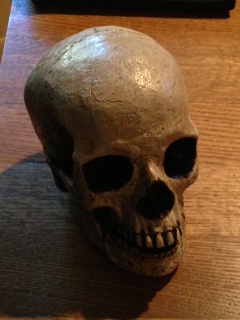
I walked into my writing room and suddenly realized there was a void in the dust on the dust atop the book-case. The space where my writing partner sat was bare. (You remember him from an earlier post. He took over my blog to get a new name. The name he chose was, Nabu, the Babylonian god of wisdom and writing which was suggested by Eagle-eyed Editor.)

What seemed most odd was that there was a trace of dust in the void. My uncanny powers of deduction indicated that my partner had been missing for some time. Now guilt struck me because I had not noticed his absence sooner. The excuse I have settled on is that I was so engrossed in writing that I simply overlooked his absence. I know, weak but passable.

I searched high and low, starting in the obvious places. As the god of wisdom and writing, it would make sense Nabu would go somewhere like my office or the other bookshelves in the house. However, I could not find him. I restrained from calling out to him for fear of what my two cats and the domestic CEO might say. My having a skull as a writing partner is still new to them. For several days I scoured the homestead. I even traveled to the cabin in search of my cohort.

One evening, the domestic CEO entered my office to find me desperately digging through a file cabinet. She calmly closed the file drawer, gently reached up and took a hold of my face, and screamed at me, “What the hell are you doing?”

I explained my plight, that I searched for my writing partner and that I felt guilty for not noticing his departure. The domestic CEO patted my cheek and smiled at me.

“Oh, that,” she said. “I put it in the garage with the other Halloween decorations.”

She turned and walked away leaving me staring aghast after her.

Relief washed over me as I realized Nabu was safe. However, the task of finding him among the myriad of decoration boxes would not be easy. Uh oh! He had been missing for months. My feeble excuse would not fly. Ah, a new idea came to me. The domestic CEO had aged another year, taking her into the realm of geezerhood. She had placed him in the decoration boxes. I would tell Nabu that her mind is going and she had forgotten what she did and where she had placed him. Yes, yes, that just might work.

I will head to the garage this weekend to release my partner. I hope he buys my story.

 
6 Comments

Posted by on January 20, 2014 in Other Strangeness


Tags: , , , , , , , ,

Does Too Much Detail Spoil the Pace?

I’ve been working on a scene involving a spiritual ceremony. It is based on a real ritual. The initial part scene is full of sensory details and the mechanics of the ceremony. Yesterday, I sat down to write and as usual, I read the last few paragraphs to refresh my recollection and get into the mood of the scene. During the read back, I realized that, though vivid, the scene had so much detail that is slowed the pace to a crawl. Just as important, was the fact that so much detail was, not necessarily, important to help create the feelings I wanted the reader to experience.

This particular scene has two primary purposes. First, to foreshadow upcoming events and second, to enhance the conflict. As I wrote the scene initially, I went into all of the details of the ceremony trying to make it as real for the reader as if they were actually there. My thinking was that it would be easier for the reader to understand the source of ‘visions’ (i.e action) the protagonist was having in the later part of the scene. When I read the scene, the experience of the ceremony was there. However, it took a long time to get to the purpose of the scene. I’m not ready to trash the experiential detail as yet. I want to finish the scene and see if the action of the second half offsets the slow pace of the beginning. If it does, I’ll leave it in. If not, it will get sliced during revision.

I much prefer a quicker paced read.  Give me enough detail to paint a picture and move on. My imagination is vivid enough to fill in the blanks, Some of the ‘Masters’ e.g. Tolkien, Jordan, Brooks, drive me nuts with the amount of detailed description. Is a four page dissertation about a pastoral setting really necessary to bring the reader into the setting? I’m sorry, but the answer is, no. Most people who read the fantasy genre already have overactive imaginations. They only need a swift kick in the pants to get an image in their heads and to the reader, their version is more vivid than the writer can explain it anyway.

However…There are times when detail is necessary. Usually this happens when the thing being described is critical to the story. For example, the description of the one Ring in LOTR. It is THE critical piece of the story so taking the time to describe it, makes perfect sense. The thing to keep in mind when adding detail to your scene is, ‘How important is the description to the Plot?’. If it is not that important, a few words or lines should be sufficient to set the scene and bring in the reader’s senses. If it is ‘the One Ring’ of your story, go ahead and take some time. It will add emphasis the reader will grasp.

As always, try to mix your setting details and descriptions into the action and/or dialogue so as to avoid the infamous info dump.

So, tell me, Do you prefer a lot of detailed description or can you get by with just enough to pique your imagination?

 
12 Comments

Posted by on October 7, 2013 in Thoughts on Writing


Tags: , , , , , , , ,

Women Protagonists in Fantasy Fiction

I recently listened to a panel of successful female writers and editors, from the fantasy genre, discuss female protagonists. As a male writer, I found it an interesting discussion. Hoping for some insight on how to make my female characters deeper and more real, what actually was discussed was a distinct dissatisfaction across the panel that most female protagonists in the fantasy genre were kickass warriors.

Hmm. Isn’t that feminist’s equality? I asked myself.

Hold on a moment. Before you all start to go off on me as being a sexist, let me continue. Everyone, myself included, was in agreement that a kickass warrior was infinitely better than the pretty pitiful princess that needs rescuing. The question became, “What other journeys are there for a female protagonist in a fantasy story beside Joseph Campbell’s ‘Hero’s Journey’?” Campbell’s journey is by far the most popular and most recognized.

Most fantasy stories have a hero of some sort as the protagonist. It just the way things are in the genre. Maybe because the standard good vs evil convention leads itself in that direction. There has to be someone to vanquish evil or evil will destroy everything.

It made me wonder about other potential character arcs. What other female specific arcs are there? As a matter of fact, I cannot remember hearing of any other character arc being ‘named’, let alone documented. What can I say, I’ve led a sheltered life. Shouldn’t any arc that you can find in literature be used in fantasy?

What other “journeys” are you aware of? Have they been documented in detail somewhere? What have you used? Have kickass female warriors become merely a cliché? Boy, I hope not! It’s hard to beat a story about a woman who goes around kicking ass and taking names.

Your Thoughts?

 
18 Comments

Posted by on July 23, 2013 in Thoughts on Writing


Tags: , , , , , , , ,

Who’s driving this crazy thing?

What is this whole process of storytelling? Sometimes we get so caught up in character arcs, plot points storyboarding, outlines vs pantsing, and God knows what else, that we forget what makes up a story and how to tell one. Sure all of the volumes on writing craft will take you down into the weeds of writing and break down every detail of the mechanics involved. However, sometimes it’s all those details that get in the way of telling a good story. I know a few writers who are so worried about the details that they become “Blocked”. We will discuss writers block in another post so I’m not going down that dark hole today.

Let me start by telling you a story:

A group of writers were sitting on a patio, drinking their tea and eating cucumber sandwiches. Being the novice among the group, I asked the question, “What do you need to tell a good story?” They all took another bite of their sandwiches and then sipped their tea. Thoughtfully, One of the more successful of the group announced that, “All you need, to tell a story, is POV and ask the question, ‘What happens next?'” His comment was followed by much head nodding and quiet mumblings of, “Yea, verily, yea.” by the rest of the successful writers present. I took this pearl of wisdom and pondered it for some time. It now seems to me to be sage advice.

Point of View (POV). Who is telling the story? This should be the most interesting person in the story. In my example above, the most interesting person is Me! 🙂 Notice I said most interesting and not most successful. The POV does not need to be from the main character. The two most used POVs are first person and third person. Third person can be further broken down to: close (intimate) view, or omniscient. Whole books have been written on these POVs so I will not go too deep here. The key thing to remember is that the POV dictates how much information can be given the reader and in what form that information will be delivered, narrative, dialogue, actions, etc.

Once you know who is telling the story, the thing that drives the story is the question, “What happens next?” Those of you who routinely write flash fiction should be very experienced with this question. All flash fiction and most writing exercises start with a prompt. For example: “I looked out the window of the airplane and …”. The writer then asks the question what happens next and writes a few sentences. Then, what happens next? Writer, writes a few more sentences and so on until the story ends or you reach so many pages that you have to make it a series. This is how stories are made.

A subset of the question what happens next is the “What if?” The quickest way I have found to get past a block is to ask the question “What if?” and write down the answer, even if it is off the wall and I know it will not make it into the final story. Then again it might! As writers we need to take risks, try new things, experiment. Desperation breeds genius. It is important not to judge the answer until you have given it a good chance to develop.

So, pick the right POV for the story, ask, “What happens next?”, then go tell your story.

What do you think?

 
12 Comments

Posted by on July 16, 2013 in Thoughts on Writing


Tags: , , , , , , , , ,